
Boiler Services in Newington, London
TMT Boilers provides boiler services in Newington like; boiler installation, repair, servicing and central-heating support for homeowners, landlords, property managers and businesses throughout Newington in the London Borough of Southwark.
Established in 2009, the company has experience working with heating systems in London flats, period homes, converted buildings, rental properties, housing estates and commercial premises.
Every recommendation begins with an assessment of the boiler and relevant parts of the heating system. Not every boiler fault requires replacement, and some problems can be repaired more economically once the underlying cause has been properly diagnosed.

TMT Boiler Business Established in 2009
Serving London properties for over 15 years

Homeowners, Landlords & Businesses
Heating support for different property needs

Gas Safe Registered Heating Engineers
Qualified for the gas work carried out

Verified Google Customer Reviews
Serving London properties for over 15 years
Boiler and Heating Support for Newington Properties
Newington contains a varied mixture of early nineteenth-century houses, Victorian terraces, converted flats, post-war housing estates, modern apartment developments and mixed-use buildings near Elephant and Castle and Walworth Road.
Sutherland Square contains early nineteenth-century, typically three-storey houses alongside later terraces, linked blocks and post-war redevelopment. Nearby residential areas also include the Rockingham, Lawson and Trinity Newington estates.

New development around Elephant and Castle has introduced thousands of apartments, new shops, restaurants and commercial spaces alongside older housing and established estates.
These differences can affect boiler location and cupboard space, pipework age and condition, flue positioning, heating and hot-water demand, radiator sizing and circulation, access through communal areas, responsibility for shared services, managing-agent or council requirements, work in conservation-area properties, and whether the home uses an individual or communal heating system.
An inspection should therefore consider the wider installation rather than only the boiler model.
Boiler Services Available in Newington
Boiler Installation and Replacement
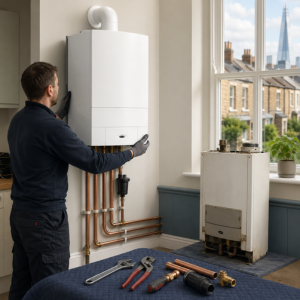
A replacement boiler should match the property’s heating and hot-water needs. The engineer may assess the current boiler, controls, radiators, pipework, flow, pressure, cupboard space, flue route, system type and any access or building-management restrictions.
Boiler Repair
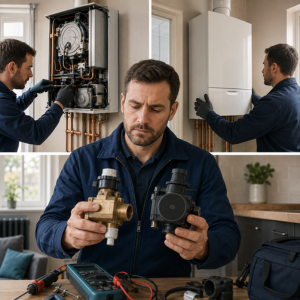
Loss of heating or hot water may be caused by pressure issues, controls, ignition faults, pumps, valves, sensors or poor circulation. A fault code can help, but the engineer will inspect the boiler, its history and the wider system before advising safe repairs.
Boiler Servicing
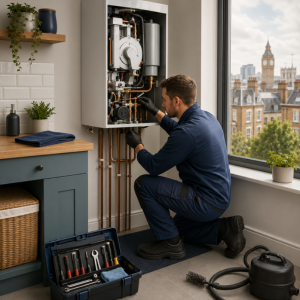
Regular servicing can help identify leaks, pressure issues, worn parts, control faults and combustion concerns. A service includes operational and safety checks, inspection of accessible components and confirmation that the controls are working correctly on site.
Power Flushing and Heating Circulation
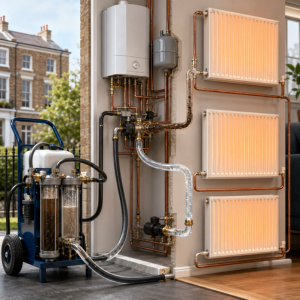
Radiators that heat slowly, stay cold at the bottom or warm unevenly may indicate sludge, trapped air, poor balancing, restricted pipework or valve faults. The system should be assessed first to decide whether flushing, balancing or repairs are suitable for it.

Landlord Gas Safety Support in Marylebone
TMT Boilers can support landlords, agents and property managers with boiler maintenance and gas-safety inspections. Annual checks must cover gas appliances and flues provided for tenants, with access coordinated through tenants, managers or estate teams on site.
Commercial Boiler Support
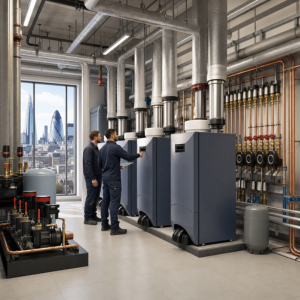
TMT Boilers expert engineers can assess any commercial heating needs for shops, cafés, offices, schools, leisure sites and mixed-use buildings. Boiler support servicing may consider the system type, gas competencies, plant access, business operating hours, hot-water demand, repair approval and site scheduling.
Common Boiler Problems in Newington

No Heating or Hot Water
A complete loss of heating or hot water may result from low pressure, control issues, electrical faults, ignition failure, pump problems, valves, sensors or another component. Note any fault code and whether heating, hot water or both are affected before arranging an inspection soon.
Boiler Losing Pressure
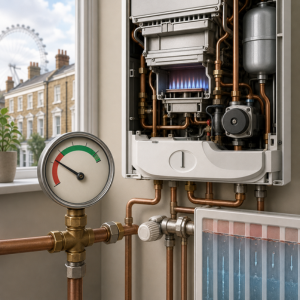
Repeated pressure loss should not be managed by continually refilling the boiler. It may be caused by a heating-system leak, expansion-vessel issue, faulty pressure-relief valve, radiator valve, trapped air or an internal boiler fault. An inspection is needed to locate the cause.
Leaking Around the Boiler
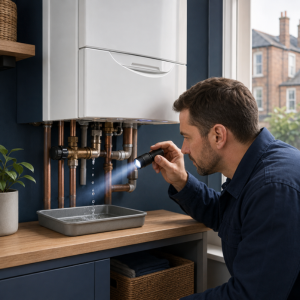
Water around a boiler may come from a connection, valve, seal, condensate component or another part of the heating system. Do not remove the casing or attempt an internal repair. Switch the appliance off where it is safe to do so and arrange a professional inspection without delay.
Fault Codes and Boiler Lockouts
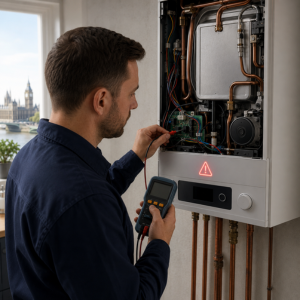
A boiler fault code can indicate which area requires investigation, but it may not confirm the exact failed part. Repeated resetting without fixing the cause can allow the issue to return. Record the code, pressure changes and any unusual sounds before contacting a qualified engineer.
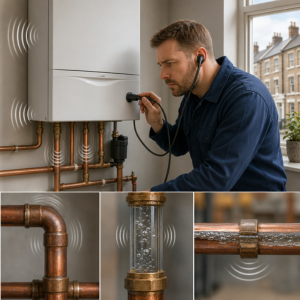
Banging, Whistling or Gurgling Noises
Banging, whistling or gurgling may be linked to trapped air, sludge, limescale, restricted circulation, pump problems, pressure changes or incorrect flow settings. The source should be properly diagnosed before any power flushing, cleaning or component replacement is recommended.

Radiators Heating Unevenly
Uneven radiator temperatures may result from trapped air, poor balancing, sludge, sticking valves, restricted pipework, circulation faults or control settings. Bleeding may help when air is present, but recurring air, persistent cold spots or slow heating require further assessment.
Heating Considerations for Newington Buildings
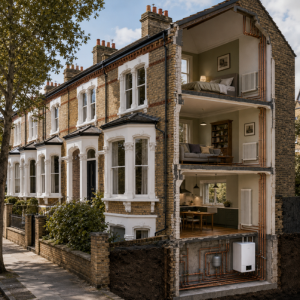
Early Nineteenth-Century Houses and Terraces
Early nineteenth-century houses and terraces may contain heating systems altered through extensions, flat conversions and later refurbishments. Engineers should assess concealed pipework, tall rooms, older radiators, historic features, flue limits, multiple floors and whether controls remain suitable.
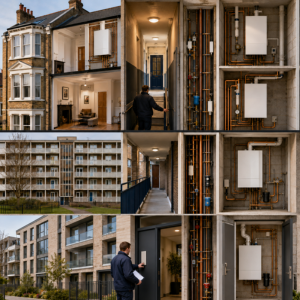
Conservation-Area and Listed Properties
Boiler work in conservation areas or listed buildings may affect external flues, historic brickwork, roofs, chimneys, visible pipework, shared walls or internal features. Owners must confirm any planning, listed-building, lease or freeholder consent before all alterations or installation work proceeds.
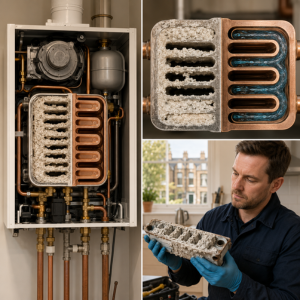
Council Estates and Managed Blocks
Work in council estates and managed blocks may require notice to teams, councils, housing associations or building managers. Confirm access, parking, communal services, repair authority, isolation permissions and asbestos information, and establish whether heating and hot water are individual or shared.
Modern Apartments and Heat Networks
Modern apartments may use communal heat networks, energy hubs, ground-source systems or heat-interface units instead of individual gas boilers. Residents should confirm the system type, network operator, the homes affected, and which approved contractor is responsible before arranging work on the site.

Converted Flats and Houses in Multiple Occupation
Converted houses and HMOs may have divided heating systems, compact boiler cupboards, shared pipe routes, concealed flues and access through communal areas. Engineers should confirm which appliances, pipework and rooms belong to the property before inspection, repair, replacement or safety work begins.
Flats Above Shops and Mixed-Use Buildings
Boiler work in flats above shops or mixed-use buildings require access through commercial premises, shared isolation, coordination with opening hours, flues crossing other areas and agreement over shared pipework. Domestic landlord gas-safety duties still apply to rented flats above commercial units.
Visible Hard Water and Limescale
Hard water can create limescale in components that repeatedly heat domestic water, sometimes contributing to reduced flow, inconsistent temperatures or unusual noises. Similar symptoms may result from valves, sensors or restrictions, so the system should be inspected before treatment or replacement.
Damp, Condensation and Uneven Heating
A working boiler may not prevent damp, condensation or uneven heating where insulation, ventilation, leaks, cold walls, radiator sizing, control schedules, circulation or building defects are inadequate. Boiler replacement alone will not resolve every moisture, ventilation, structural or heat-loss issue.
Surface-Water and Basement Risks
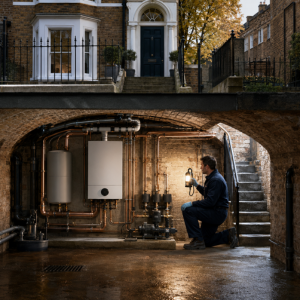
Surface-water flood risk varies by street, drainage, ground level, rainfall and building design. If a basement or lower-ground boiler, electrical control or heating appliance has been exposed to significant water ingress, it should remain switched off until professionally inspected and confirmed safe.
Regeneration and Changing Heating Systems
Redevelopment around Newington and Elephant and Castle includes estates, period homes and modern apartments with different heating arrangements. Before booking work, confirm whether the property uses a gas boiler, communal system, heat network, heat-interface unit, electric heating or a heat-pump system.
How TMT Boilers Approaches the Work
Explain the Problem
Provide the boiler make, fault code and details of the heating or hot-water issue.
Confirm Property Access
Discuss entry arrangements, parking and any landlord or building-management requirements.
Identify the Heating System
Confirm whether the property has an individual boiler or communal heating.
Inspect the Boiler
The engineer examines the appliance and relevant parts of the heating system.
Diagnose the Fault
Appropriate checks are carried out to identify the likely underlying cause.
Explain the Options
Suitable repair or replacement options are discussed clearly.
Agree the Work
The scope and quotation are confirmed before the agreed work proceeds.
Complete Safety Checks
The boiler and relevant system functions are tested before completion.
Repairing or Replacing a Boiler
Not every boiler fault means that a new appliance is required.
Repair May Be Appropriate When
✓ The fault is isolated and repairable
✓ Replacement parts remain available
✓ The boiler remains suitable for the property
✓ The wider heating system is in reasonable condition
✓ The expected repair cost is proportionate
✓ Breakdowns have not become persistent
Replacement May Be Discussed When
✓ Faults are becoming frequent
✓ Important components are obsolete
✓ Corrosion or deterioration is extensive
✓ The boiler is unsuitable for current demand
✓ Alterations have left the installation poorly configured
✓ Repair would not provide a reasonable long-term outcome
The decision should be based on inspection and diagnosis rather than sales pressure.
Boiler Finance and Instalment Enquiries
TMT Boilers does not directly provide, approve or manage boiler finance.
Where an eligible purchasing option is available, the customer may be introduced to an approved boiler supplier to discuss finance or instalment arrangements. The supplier manages the application and boiler purchase. Once the purchase has been completed, TMT Boilers carries out the agreed installation.
Reducing the Risk of Heating Problems
Homeowners, landlords and property managers can reduce avoidable disruption by:

Arranging regular boiler servicing
Monitoring repeated pressure loss

Investigating visible leaks promptly

Recording recurring fault codes
Checking heating controls before winter
Having uneven radiators assessed
Maintaining suitable corrosion inhibitor
Keeping boiler cupboards accessible
Confirming annual gas-safety arrangements
Planning maintenance for older systems
Clarifying responsibility for communal heating
Reviewing insulation, ventilation and heat loss
Urgent Boiler Assistance in Newington
Contact TMT Boilers when urgent assistance is required for a boiler breakdown, leak, loss of heating or loss of hot water.
Emergency attendance may be available depending on engineer availability. Additional call-out charges may apply according to the day, time and urgency.
TMT Boilers does not promise guaranteed 24-hour availability, immediate attendance or same-day repair.
Where there is a suspected gas leak, carbon-monoxide concern or unsafe gas appliance, stop using the appliance and follow the appropriate gas-emergency procedure.
Reducing the Risk of Heating Problems
Homeowners, landlords and property managers can reduce preventable disruption by:
Arranging regular boiler servicing
Monitoring recurring pressure loss
Investigating visible leaks promptly
Checking heating controls before colder weather
Having persistently uneven radiators assessed
Maintaining suitable corrosion inhibitor
Recording recurring fault codes
Keeping boiler and plant areas accessible
Planning maintenance for older heating systems
Confirming landlord gas-safety arrangements
Reviewing insulation and heat loss
Checking systems before reoccupying
Programmers, thermostats and thermostatic radiator valves can help control when and where heat is delivered, rather than heating every room in the same way.
Why Contact TMT Boilers?
Serving London properties since 2009
Inspection before repair or replacement recommendations
Support for homeowners, landlords and businesses
Experience with period properties and flats
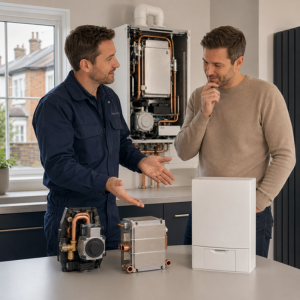
Boiler installation, repair and servicing support
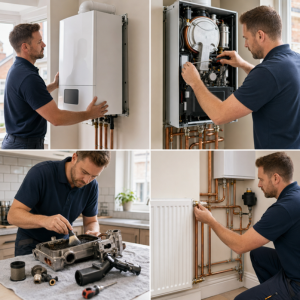
Heating-circulation and radiator assessment

Clear explanation of available options
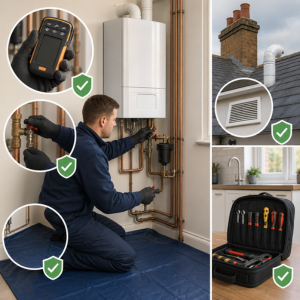
Safety-conscious working process
Emergency attendance may be available
Supplier-managed boiler-purchase options where available
Areas We Cover Around Marylebon
Request Boiler Support in Newington
Contact TMT Boilers to discuss a boiler fault, annual service, replacement, heating-circulation problem, landlord inspection or commercial heating requirement.
Type in the Boiler Service you need
Form note: Submitting this form does not confirm an appointment. TMT Boilers will contact you to review your request and confirm availability.